
DOWSIL EE-1010 LOW VISCOSITY ENCAPSULANT
Harmonization Code : 3910.00.00.90 | Silicones in Primary Forms; Others
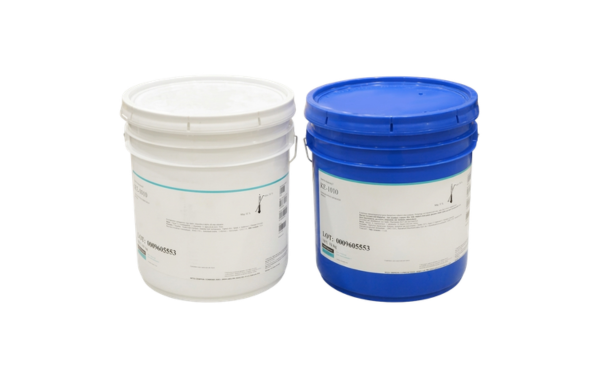
Main features
- Low-Viscosity Encapsulant Application
- Controlled Cure Flexibility
- Firm Elastomeric Electrical Protection
Product Description
DOWSIL™ EE-1010 Low Viscosity Encapsulant Kit is a two-part, 1:1 mix polydimethylsiloxane silicone elastomer for protecting electrical PCB assemblies. Its typical mixed viscosity of 840 mPa·s and extended working time support flow through narrow spaces while providing additional time for entrapped air to rise and break in complex board and component geometries. The material can be dispensed manually or through meter-mixing equipment and cured at room temperature or accelerated with heat. After cure, it forms a flexible 60 Shore A elastomer with documented dielectric properties and moderate thermal conductivity, making it suitable for complex assemblies and manufacturing processes involving frequent starts and stops.
Key features
- Low mixed viscosity: A typical mixed viscosity of 840 mPa·s supports flow and filling through narrow spaces in complex PCB assembly geometries.
- Extended working time: A typical pot life of 50 minutes at 25°C provides additional processing time for air displacement and start-stop manufacturing operations.
- Flexible cure schedules: The material can be cured for 24 hours at 25°C or heat accelerated to 3 minutes at 100°C or 2 minutes at 150°C.
- 1:1 two-part processing: The equal mix ratio supports manual or meter-mix dispensing, while contrasting component colors assist visual identification during mixing.
- Electrical and mechanical protection: The cured elastomer has a typical hardness of 60 Shore A, dielectric strength of 18 kV/mm, and volume resistivity of 1.19 × 10¹⁵ ohm·cm.
Applications / Suitable for
- Protection and encapsulation of electrical PCB system assemblies
- Complex boards and component layouts containing narrow spaces
- Manufacturing processes involving frequent starts and stops
- Assemblies requiring additional time for entrapped air to rise and break before cure
Related resources
Technical Specifications
Thermal Properties
Electrical Properties
Additional Information
DOWSIL EE-1010 Low Viscosity Encapsulant Kit
DOWSIL EE-1010 is a two-part, 1:1 addition-cure polydimethylsiloxane silicone elastomer for protecting electrical PCB system assemblies. Low-viscosity flow and a 50-minute pot life at 25 deg C support complex board geometries and manufacturing with frequent starts and stops, while room-temperature and heat-accelerated cure options provide flexible process timing.
Typical as-supplied properties
Values are typical and are not intended for use in preparing specifications. Component states are kept separate.
| Property | Value | Unit | Method / condition |
|---|---|---|---|
| Mix ratio | 1 to 1 | - | Typical product ratio |
| Viscosity, Part A | 1020 | mPa s | Typical as-supplied value |
| Viscosity, Part B | 600 | mPa s | Typical as-supplied value |
| Specific gravity, uncured Part A | 1.26 | - | Typical as-supplied value |
| Specific gravity, uncured Part B | 1.25 | - | Typical as-supplied value |
Mixing, dispensing and cure
Cure begins when Parts A and B are mixed. Accurate proportioning, thorough mixing, air management, surface preparation when adhesion is required, and the selected cure temperature are the main process controls for EE-1010.
Use the product before the date shown on the label and follow the labeled storage-temperature requirements. Keep containers tightly closed, minimize headspace, and prevent moisture contact. For partially filled containers, Dow recommends purging the headspace with dry air or nitrogen before resealing.
Typical cured electrical and thermal properties
These values describe the cured material and are typical, not guaranteed design values. Dielectric strength is a material test property and should not be treated as an assembly working-voltage rating.
| Property | Value | Unit | Method / condition |
|---|---|---|---|
| Dielectric strength | 18 | kV/mm | Typical cured value; test method not stated in supplied TDS |
| Volume resistivity | 1.19E+15 | ohm cm | Typical cured value; test method not stated in supplied TDS |
| Dielectric constant | 3.17 | - | At 100 kHz and 1 MHz |
| Thermal conductivity | 0.35 | W/(m K) | Typical cured value; test method not stated in supplied TDS |
| Linear CTE | 300 | ppm/deg C | By TMA |
Cure compatibility and repair
Material compatibility and repair method can materially affect processing. Use the supplier guidance below as evaluation controls rather than universal guarantees for every assembly.
Electronics protection applications
EE-1010 is intended for PCB assembly encapsulation where low-viscosity flow, an extended working window, and flexible silicone protection are useful process and application considerations.
Encapsulants and Gels Selection Guide
This 2023 Dow selection guide places EE-1010 within the standard encapsulant portfolio and provides portfolio-level comparison of flow class, cure system, working time, cure options, physical properties, and dielectric strength for product screening.
Use the guide to compare EE-1010 with other Dow encapsulants and gels by processing profile and product characteristics. Product-specific qualification should remain tied to the intended assembly and current supplier data.
Evaluate DOWSIL EE-1010 for your PCB encapsulation process
Krayden can help review board geometry, mixing and dispensing approach, working time, cure temperature, air-management strategy, adhesion requirements, cure-inhibition risks, dielectric needs, and rework considerations for evaluating EE-1010 in an electronics protection process.


