Potting Materials

Epoxy, Urethane, Silicone and Acrylic materials

Potting materials

Potting compounds are versatile materials designed to protect electronic assemblies from environmental hazards and mechanical stress. These compounds effectively shield circuit boards and electronic components from moisture, vibration, thermal fluctuations, and physical shocks, ensuring optimal performance under demanding conditions. By filling the spaces around electronic components and circuit boards, potting compounds ensure that the devices remain operational in harsh conditions, ranging from extreme temperatures to high-humidity environments. This encapsulation process also helps to improve the electrical insulation properties of the assembly, reducing the risk of short circuits and enhancing the overall reliability of the device.

Potting compounds provide reliable protection across various industries, from consumer electronics to industrial automotive and aerospace applications. The potting materials ensure the longevity and reliability of electronic systems in demanding conditions. Available in various formulations such as epoxy, urethane, silicone, and acrylic, potting compounds offer distinct properties tailored to specific application requirements.

107 products

  • 3M 281

    3M 281

    • Class F (155 deg C) Temperature Rating
    • Thermally Conductive Encapsulation
    • Upgraded Structural Characteristics
  • 3M DP270

    3M DP270

    • Low-Viscosity Electronic Potting
    • 70-Minute Working Window
    • Low-Shrinkage Rigid Encapsulation
  • ABLESTIK 9392

    ABLESTIK 9392

    • Flexible Cured Adhesive
    • 168-Hour 24 deg C Cure
    • 1.00 x 10^13 ohm-cm Volume Resistivity
  • ARADUR HY 1300

    ARADUR HY 1300

    • Specified 150-190 mPa.s Viscosity
    • 12.5-pbw System Mix Ratio
    • Casting and Vacuum-Casting Processing
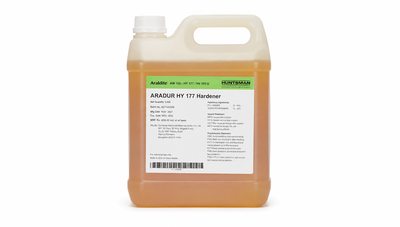
  • ARADUR HY 177

    ARADUR HY 177

    • 600-900 mPa.s Component Viscosity
    • 40-60 Minute System Pot Life
    • Manual or Automatic System Metering
  • ARADUR HY 918

    ARADUR HY 918

    • 50-80 mPa.s Component Viscosity
    • APG or Vacuum-Casting Processing
    • High-Voltage Insulation System Use
  • ARALDITE AW134

    ARALDITE AW134

    • Controlled Paste-Grade Resin Handling
    • 80-to-100-Minute System Pot Life
    • Multipurpose Metal and Ceramic Bonding
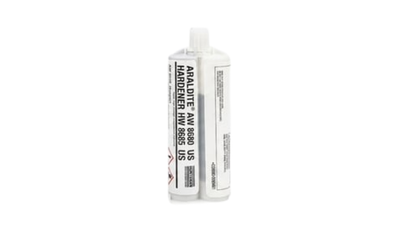
  • ARALDITE AW8680

    ARALDITE AW8680

    • Flexible Polyurethane Adhesive Formulation
    • Convenient 1:1 Volume Mixing
    • Fifteen-Minute Mixed Pot Life
  • ARALDITE CW 177

    ARALDITE CW 177

    • Mineral-Filled Electrical Casting Epoxy
    • 22,000 to 27,000 mPa s Casting Viscosity
    • Transformer and Capacitor Encapsulation
  • ARALDITE CW229

    ARALDITE CW 229

    • Filled Epoxy Resin
    • High-Viscosity Resin Handling
    • Electrical-Insulation Resin Applications
  • ARALDITE CY179-1

    ARALDITE CY179-1

    • Configurable Heat-Cure Formulation
    • Electrical Casting Resin Component
    • Encapsulation System Processing Base
  • ARALDITE GY6010

    ARALDITE GY6010

    • Medium-Viscosity Liquid Processing
    • Multiple Hardener Cure Options
    • Versatile Resin Formulation Base
  • ARALDITE HARDENER 8579

    ARALDITE HARDENER 8579

    • Paste Hardener Formulation
    • Easy to Mix and Apply
    • High-Viscosity Placement Control
  • ARALDITE LY5052

    ARALDITE LY5052

    • Low-Viscosity Composite Processing
    • Multiple Composite Process Routes
    • Tooling and Repair System Fit
  • ARALDITE MY721

    ARALDITE MY721

    • Low-Viscosity Reinforcement Wet-Out
    • Long Processing Pot Life
    • High-Temperature Composite Performance
  • Araldite® CY 8763 Resin / Aradur® HY 8763 Hardener

    Araldite® CY 8763 Resin / Aradur® HY 8763 Hardener

    • Epoxy System for Battery Encapsulation
    • 2:1 Controlled Mixing
    • 700 V/mil Dielectric Strength
  • AXSON EC-433-2

    AXSON EC-433-2

    • Up to 300 deg F Continuous Tooling
    • Up to 350 deg F Intermittent Exposure
    • Aluminum-Filled Tooling Formulation
  • CONAPOXY RN-1000

    CONAPOXY RN-1000

    • Amber Epoxy Potting and Casting Resin Compatible
    • 24-Hour 25 deg C Cure
    • Three Curing-Agent Systems
  • CONATHANE EN-11

    CONATHANE EN-11

    • Flexible Two-Component Polyurethane System for Potting
    • 5,750 cP Mixed Viscosity
    • 350% Cured Elongation
  • CONATHANE EN-12

    CONATHANE EN-12

    • Flexible Two-Component Polyurethane System for Electrical
    • 6,500 cP Mixed Viscosity
    • Shore A 50 Hardness
  • CONATHANE EN-1554

    CONATHANE EN-1554

    • Polyether-Based Polyurethane for Harness Breakouts
    • 550% Cured Elongation
    • Water and Fuel Resistance
  • CONATHANE EN-20

    CONATHANE EN-20

    • Unfilled 100% Solids Polyurethane for Casting
    • 1,200 cP Mixed Viscosity
    • Low-Exotherm Encapsulation Processing
  • CONATHANE EN-21

    CONATHANE EN-21

    • Low-viscosity
    • Room-temperature cure
    • Good electrical and thermal properties
  • CONATHANE EN-2521

    CONATHANE EN-2521

    • Filled Polyurethane Encapsulant for Modules
    • 65 to 130 deg C Service Range
    • 39% Cured Elongation
  • CONATHANE EN-2523

    CONATHANE EN-2523

    • Filled Polyurethane Electrical Encapsulant
    • 2,800 cP Mixed Viscosity
    • 50% Cured Elongation
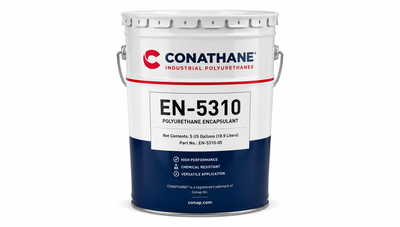
  • CONATHANE EN-5310

    CONATHANE EN-5310

    • Re-Enterable Polyurethane System
    • 1:1 Controlled Mixing
    • 3,000 cP Mixed Viscosity
  • CONATHANE EN-7

    CONATHANE EN-7

    • Fixed En-4 Plus En-7 System
    • 30-Minute Gel Window
    • Multiple Cure Schedule Options
  • CONATHANE EN-9

    CONATHANE EN-9

    • Fixed En-4 Plus En-9 System
    • 120-Minute Gel Window
    • Multiple Elevated-Temperature Cures
  • CONATHANE TU-401

    CONATHANE TU-401

    • Two-Component Urethane Potting Prepolymer
    • Circuit-Board and Cable Encapsulation
    • Low-Viscosity High-Elongation Elastomer Systems
  • CONATHANE TU-701

    CONATHANE TU-701

    • Fixed Tu-401/TU-701 Polyurethane System
    • 20 to 30-Minute Working Window
    • Shore A 70 with 750% Elongation
  • CONATHANE TU-801

    CONATHANE TU-801

    • Two-Component Polyurethane Part B Curative
    • 100% Solids Flexible Casting System
    • High-Toughness Chemical-Resistant Cured System
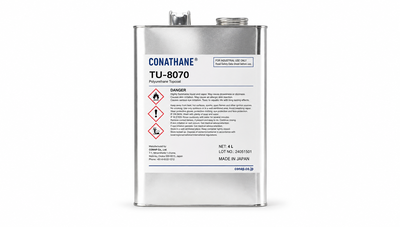
  • CONATHANE TU-8070

    CONATHANE TU-8070

    • 100% Solids Polyurethane Casting
    • 1,000 cP Mixed Viscosity
    • Wheels, Gaskets, and Flexible Molds
  • CONATHANE TU-89MF

    CONATHANE TU-89MF

    • 15 to 25-Minute Working Window
    • 22.1 MPa Cured Tensile Strength
    • Flexible Cured Material
  • CONATHANE UC-40

    CONATHANE UC-40

    • Ambient-Cure 100% Solids Casting
    • High-Impact Dimensionally Stable Castings
    • Thermoplastic-Like Prototype Finish
  • COOLTHERM EP-6007

    COOLTHERM EP-6007

    • 45-Minute Working Window
    • 0.62 W/(m K) Thermal Interface
    • 19.7 kV/mm Dielectric Strength
  • CoolTherm® SC-320 Thermally Conductive Silicone

    CoolTherm® SC-320 Thermally Conductive Silicone

    • 3.0 W/m·K thermal conductivity
    • Low-stress, low-viscosity silicone
    • UL 94 V-0 and Class H insulation
  • CoolTherm® SC-324 Thermally Conductive Silicone

    CoolTherm® SC-324 Thermally Conductive Silicone

    • 4.0 W/m·K thermal conductivity
    • Durable UL 94 V-0 flame rated, addition-cure PDMS
    • Low-stress low viscosity potting
  • CYTEC UF-3

    CYTEC UF-3

    • Two-Component Polyurethane Electronics-Packaging Foam
    • One-Hour Cure Cycle
    • Solvent, Oil, and Moisture Resistance
  • DEVCON FLEXANE 80

    DEVCON FLEXANE 80

    • Medium-Viscosity Application Control
    • 10-Hour Cure Cycle
    • Shore A 87 and 650% Elongation
  • DOWSIL 3-4154 CLEAR DIELECTRIC GEL

    DOWSIL 3-4154 Dielectric Gel Kit

    • Electrically Insulating Material
    • 550 mPa s Mixed Viscosity
    • 180-Minute 80 deg C Cure
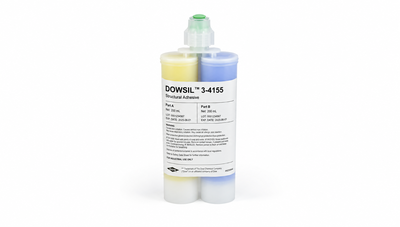
  • DOWSIL 3-4155

    DOWSIL 3-4155

    • 60-Minute Gel Window
    • Soft 60 G Gel for Dielectric Encapsulation
    • 65 to 200 deg C Service Range
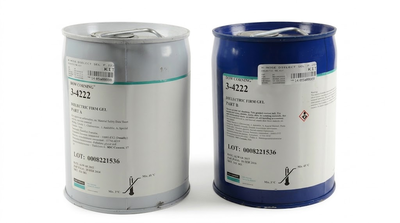
  • DOWSIL 3-4222

    DOWSIL 3-4222

    • 30-Minute Cure Cycle
    • Visual 1:1 Mix Verification
    • 14 kV/mm Dielectric Strength
  • DOWSIL 3-4241

    DOWSIL 3-4241

    • Over One-Hour Working Time
    • Conditional Primerless Adhesion
    • 17 kV/mm Dielectric Strength
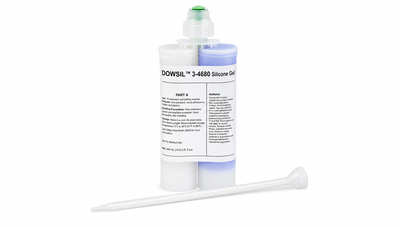
  • DOWSIL 3-4680

    DOWSIL 3-4680

    • Fast Room-Temperature Encapsulation Cure
    • Low-Viscosity Dispensing Control
    • Electrically Insulating Encapsulation
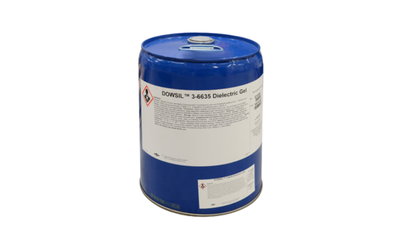
  • DOWSIL 3-6635 CLEAR DIELECTRIC GEL

    DOWSIL 3-6635 CLEAR DIELECTRIC GEL

    • 80 to 200 deg C Service Range
    • Ultra-Soft Dielectric Gel
    • 20 kV/mm Dielectric Strength
  • DOWSIL LPA-4000

    DOWSIL LPA-4000

    • One-Part Non-Slumping RTV Silicone
    • Spray, Trowel, Brush, or Roller Application
    • Thermally Conductive Coating
  • DOWSIL SE4445

    DOWSIL SE 4445

    • Two-Component Electronics Silicone System
    • White/Charcoal Component Identification
    • 2.4 Relative Density
  • DOWSIL™ 3-4150 Dielectric Gel Kit

    DOWSIL™ 3-4150 Dielectric Gel Kit

    • Low viscosity and room temperature cure gel
    • Low stress
    • Excellent dielectric performance
  • DOWSIL™ 3-4207 Dielectric Tough Gel Kit

    DOWSIL™ 3-4207 Dielectric Tough Gel Kit

    • Multiple cure schedule for flexible processing.
    • Translucent green with UV indicator support for automated inspection.
    • 59 Shore 00 toughened gel with UL 94 V-1 and EN 45545-2 R25 HL3 listed
  • ECCOBOND F113

    ECCOBOND F113

    • Low-Viscosity Precision Application
    • Optically Clear Material
    • High Surface Wettability
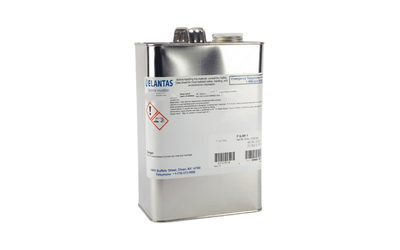
  • ELANTAS EN-2550

    ELANTAS EN-2550

    • Flame-Retardant Polyurethane Electrical Potting
    • 3,000 cP Mixed Viscosity
    • UL 94 V-0 Classification
  • ELANTAS EN-2553

    ELANTAS EN-2553

    • Filled Flame-Retardant Polyurethane Potting System for Components
    • 4,500 cP Mixed Viscosity
    • UL 94 V-0 Classification
  • ELANTAS FR-1047
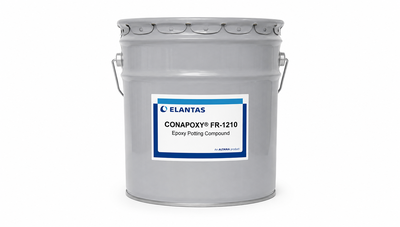
  • ELANTAS FR-1210

    ELANTAS FR-1210

    • Low-Shrinkage Electrical Potting Resin
    • EA-02/EA-028/EA-87 Hardener Compatibility
    • 4,500 to 10,000 cP Mixed Viscosity
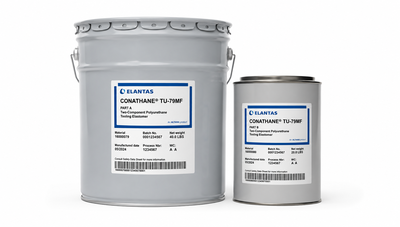
  • ELANTAS TU-79MF

    ELANTAS TU-79MF

    • Abrasion-Resistant Polyurethane Tooling Elastomer
    • 4,000 cP Mixed Viscosity
    • 1,800 psi Cured Tensile Strength
  • ELANTAS TU-8040

    ELANTAS TU-8040

    • 1:1 Controlled Mixing
    • 1,700 cP Mixed Viscosity
    • 700% Cured Elongation
  • ELANTAS TU-8080

    ELANTAS TU-8080

    • Two-Component 100% Solids Polyurethane
    • Abrasion-Resistant Casting/Tooling Elastomers
    • 100:30 Controlled Mix Ratio
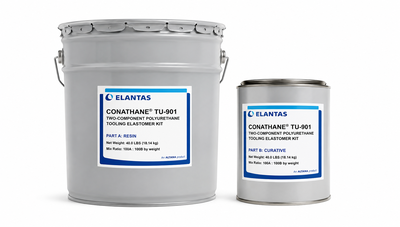
  • ELANTAS TU-901

    ELANTAS TU-901

    • Two-Component Light-Amber Polyurethane System for UV-Stable Potting
    • 4,000 psi Cured Tensile Strength
    • 2 ohm-cm Volume Resistivity
  • EPOCAP 43645

    EPOCAP 43645

    • Two-Component Room-Temperature Epoxy
    • 7,000 psi Tensile Strength
    • 90-Minute Gel Time
  • EPOCAP 55137

    EPOCAP 55137

    • UL Hazardous-Locations Class I/II Recognition
    • Low-Shrinkage Fuel-Resistant Encapsulation
    • 7,968 psi Tensile Strength
  • EPOCAST 1511

    EPOCAST 1511

    • Non-Sag Placement Control
    • 40 to 60-Minute Working Window
    • BMS 5 to 28 Type 3 Qualified
  • EPOCAST 1617

    EPOCAST 1617

    • Low-Density Potting Material
    • Self-Extinguishing Sealing Material
    • One-Hour Working Window
  • EPOCAST 1619-1

    EPOCAST 1619-1

    • Flame-Retardant Epoxy Syntactic
    • Room-Temperature Encapsulation Cure
    • Pourable/Extrudable Mixed Processing
  • EPOCAST 1627-2

    EPOCAST 1627-2

    • Low-Thermal-Expansion Epoxy Syntactic
    • Composite-Core Reinforcement Compound
    • BMS 5-21 Type 2 Qualification
  • EPOCAST 1628

    EPOCAST 1628

    • Ultra Low Density Paste
    • Flame-Resistant Application Paste Material
    • Non-Sag Placement Control
  • EPOCAST 1635

    EPOCAST 1635

    • High-Temperature Composite Repair
    • High-Strength Aluminum-Filled Epoxy
    • Fatigue-Resistant Epoxy Syntactic
  • EPOCAST 1636

    EPOCAST 1636

    • High-Density Casting Material
    • High Temperature Potting Compound
    • Self-Extinguishing Bonding Material
  • EPOCAST 1648

    EPOCAST 1648

    • Low-Density Flame-Retardant Syntactic
    • Controlled Syntactic Dispensing
    • BMS 5-28 Type 18 Class 1
  • EPOCAST 1652

    EPOCAST 1652

    • Low Density Syntactic
    • Paste Consistency for Application
    • High Compressive Strength
  • EPOCAST 1656

    EPOCAST 1656

    • Low-Density Potting Material
    • Paste Consistency for Application
    • Long Work Life
  • EPOCAST 169-1

    EPOCAST 169-1

    • Low-Density Epoxy Syntactic Resin
    • Paste Consistency for Application
    • Machinable Application Paste Material
  • EPOCAST 89537

    EPOCAST 89537

    • Non-Sag Placement Control
    • Low-Density, Glass-Fiber-Reinforced Syntactic
    • Self-Extinguishing Epoxy Syntactic
  • EPOCURE 46505

    EPOCURE 46505

    • Filter-Media-to-Metal End-Cap Bonding
    • Synthetic-Lubricant and Motor-Oil Resistance
    • 125-Minute Gel Window
  • HUNTSMAN ARALDITE CW 1446

    HUNTSMAN ARALDITE CW 1446

    • Filled, Solvent-Free Epoxy Casting and Impregnation System
    • Six-Hour Cure Cycle
    • UL 94 V-0 Classification
  • INSULCAST 116 FR-FC

    INSULCAST 116 FR-FC

    • Equal-Ratio Production-Line Epoxy Potting
    • 9,800 cP Mixed Viscosity
    • UL 94 V-0 Classification
  • INSULCAST 140 FR

    INSULCAST 140 FR

    • Epoxy Casting with Insulcure 11B
    • 50,000 cP Mixed Viscosity
    • 2.3 W/(m K) Thermal Encapsulation
  • INSULCAST 502

    INSULCAST 502

    • Low-Viscosity Encapsulation Application
    • Room-Temperature Encapsulation Cure
    • 200 to 300 cP Mixed Viscosity
  • INSULCAST 987

    INSULCAST 987

    • Semi-Flexible Broad-Temperature Epoxy Potting
    • 60,000 cP Mixed Viscosity
    • -55 to 155 deg C Service Range
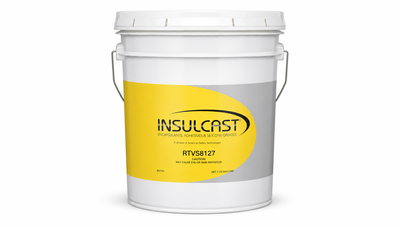
  • INSULCAST RTVS 8127

    INSULCAST RTVS 8127

    • Flame-Retardant 1:1 Silicone Encapsulation
    • 4,000 cP Mixed Viscosity
    • 0.75 W/(m K) Thermal Encapsulation
  • LAIRD CFS-8480

    LAIRD CFS-8480

    • Broad RF Absorption Capability
    • Flexible Castable Processing
    • Elevated-Temperature Electrical Performance
  • LAIRD CR-110

    LAIRD CR-110

    • Above 26 GHz Absorption Range
    • 100:16.5 Controlled Mixing
    • Below 180 deg C Service Temperature
  • LAIRD CR-114

    LAIRD CR-114

    • 10 to 14 GHz Absorption Range
    • 100:6.5 Controlled Mixing
    • Below 180 deg C Service Temperature
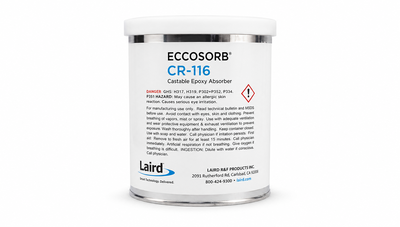
  • LAIRD CR-116

    LAIRD CR-116

    • 6 to 12 GHz Absorption Range
    • 100:4.3 Controlled Mixing
    • Below 180 deg C Service Temperature
  • LAIRD CR-124

    LAIRD CR-124

    • Below 5 GHz Absorption Range
    • 100:2.6 Controlled Mixing
    • Up to 150 deg C Service Temperature
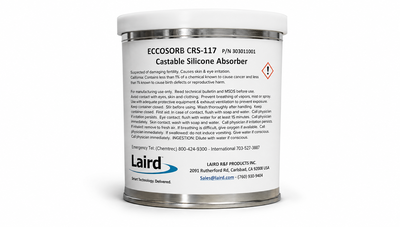
  • LAIRD CRS-117

    LAIRD CRS-117

    • Flexible RTV Silicone Microwave Absorber
    • 100:1.18 Controlled Mixing
    • 0.9 W/(m K) Thermal Conductivity
  • LAIRD CRS-124

    LAIRD CRS-124

    • Flexible RTV Silicone Microwave Absorber
    • 100:1.00 Controlled Mixing
    • 1.0 W/(m K) Thermal Conductivity
  • LAIRD CRS-124CRS-124

    LAIRD CRS-124CRS-124

    • Custom Cast Microwave Loads
    • Above-1-GHz RF Attenuation
    • Impact-Resistant Silicone Elastomer
  • LINQBOND PM-1211 | Two part silicone potting material

    LINQBOND PM-1211 | Two part silicone potting material

    • Solvent free
    • Excellent weather resistance
    • UV resistance
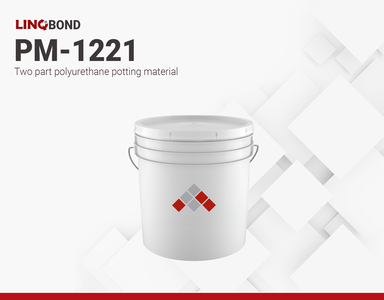
  • OPTOLINQ PM-1221 | Two part polyurethane potting material

    LINQBOND PM-1221 | Two part polyurethane potting material

    • Low-stress potting material
    • Excellent seismic and voltage resistance
    • Room temperature curing
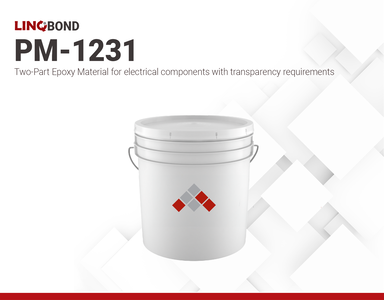
  • LINQBOND PM-1231 | Two part epoxy potting material

    LINQBOND PM-1231 | Two part epoxy potting material

    • High resistance against weathering, aging, and UV radiation
    • Non-corrosive, insulating, moisture-proof, and shock-resistant
    • Solvent-free, environmentally friendly, and low in carbon footprint
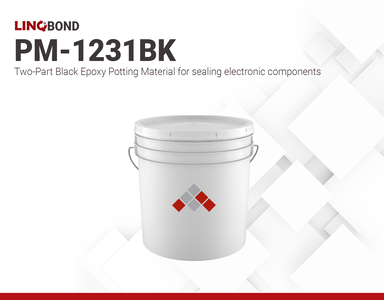
  • LINQBOND PM-1231BK | Two part black epoxy potting material

    LINQBOND PM-1231BK | Two part black epoxy potting material

    • High resistance against weathering, aging, and UV radiation
    • Non-corrosive, insulating, moisture-proof, and shock-resistant
    • Solvent-free, environmentally friendly, and low in carbon footprint
  • LINQBOND PM-2632 | Two part epoxy resin potting material

    LINQBOND PM-2632 | Two part epoxy resin potting material

    • Low viscosity
    • Low-temperature curing
    • Ideal potting material for capacitors and epoxy resin for edge casting
  • OPTOLINQ PM-4911 | Two part silicone potting material

    LINQBOND PM-4911 | Two part silicone potting material

    • Low stress silicone potting gel
    • Low viscosity, good leveling, and bubble-free curing
    • Excellent long term temperature resistance
  • LINQBOND PM-4911HV | Two part silicone potting material

    LINQBOND PM-4911HV | Two part silicone potting material

    • Low stress silicone potting gel
    • Low viscosity, good leveling, and bubble-free curing
    • Excellent long term temperature resistance
  • LINQBOND PM-PU211 | Polyurethane Potting material

    LINQBOND PM-PU211 | Polyurethane Potting material

    • Electrically insulating
    • Excellent adhesion to different substrates
    • Void free casting
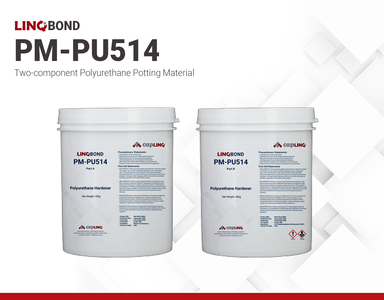
  • LINQBOND PM-PU514 | Two-component Polyurethane Potting Material

    LINQBOND PM-PU514 | Two-component Polyurethane Potting Material

    • Low Viscosity
    • Excellent Thermal Conductivity
    • Wide Temperature Range
  • LINQBOND PM-WD310 | Two part epoxy potting material

    LINQBOND PM-WD310 | Two part epoxy potting material

    • Good moisture resistance
    • Excellent thermal shock resistance
    • Low outgassing
  • LOCTITE E-60NC

    LOCTITE E-60NC

    • Two-Component Adhesive System
    • Low-Viscosity Adhesive Application
    • Non-Corrosive Bonding Formulation
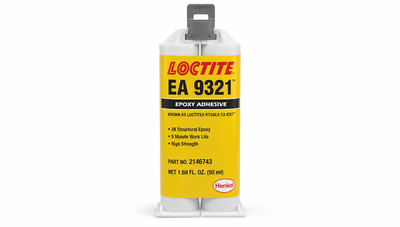
  • LOCTITE EA 9321

    LOCTITE EA 9321

    • Thixotropic Application Control
    • Room-Temperature Retention Cure
    • 1,000 psi Lap Shear
  • LOCTITE EA 9807

    LOCTITE EA 9807

    • Pourable Intermediate-Density Epoxy Syntactic
    • Room-Temperature or Heat Cure
    • 121 deg C Service Temperature
  • LOCTITE EA 9825

    LOCTITE EA 9825

    • Low-Density, One-Component Epoxy Syntactic
    • Up to 350 deg F Service
    • Honeycomb Composite Potting
  • LOCTITE ES6010

    LOCTITE ES6010

    • Low-Viscosity Electronics Potting
    • 80-to-100-Minute Working Time
    • Room-Temperature or Heat Cure
  • LOCTITE SI 5210

    LOCTITE SI 5210

    • Ultra-Fast RTV Silicone Cure
    • Non-Corrosive Alkoxy-Cure Potting
    • Thixotropic Non-Sag Application
  • LORD 7550A Urethane Adhesive

    LORD 7550A Urethane Adhesive

    • Equal-Mix LORD 7550 Resin Component
    • 1,800 to 4,000 cP Viscosity
    • Lexan, ABS, and Primed-Metal Bonding
  • LORD 7550C Urethane Adhesive

    LORD 7550C Urethane Adhesive

    • Equal-Mix LORD 7550 Curative Component
    • 6,000 to 12,500 cP Viscosity
    • Lexan, ABS, and Primed-Metal Bonding
  • PM-PU111 | Polyurethane Potting Material

    PM-PU111 | Polyurethane Potting Material

    • Low shrinkage volume
    • High flowability
    • Void free casting
  • PM-SI611 | Silicone Potting material

    PM-SI611 | Silicone Potting material

    • High temperature resistance
    • High flowability
    • Void free casting

Product selector guide

Encapsulants are designed to support efficient heat transfer through a combination of high thermal conductivity and low viscosity, allowing the material to flow more easily around components while promoting more effective heat dissipation. Beyond thermal management, these potting and encapsulation materials also help protect assemblies from dust and moisture and can contribute to vibration reduction. Two-component encapsulants are formulated to deliver minimal shrinkage during cure, along with high dielectric strength and dependable thermal conductivity.

Parker Lord Potting and Encapsulants

Product Chemistry Thermal Conductivity (W/m·K) Viscosity (cP) Density (g/cm³)
CoolTherm® SC-309 Silicone 1.0 3,600  1.7
CoolTherm SC-252 Silicone 2.5 18,000  2.9
CoolTherm SC-320 Silicone 3.2 22,000  3.1
CoolTherm SC-324 Silicone 4.0 30,000 3.2
CoolTherm EP-2000 Epoxy 1.9 1,900 * 2.7
CoolTherm EP-3500 Epoxy 3.3 8,000* 3.0
CoolTherm EP-6035 Epoxy 1.0 12,000 1.6
CoolTherm EP-340/70 Epoxy 1.5 10,000 2.2
CoolTherm UR-288 Urethane 0.4 5,000 1.37
CoolTherm UR-389 Urethane 0.7 14,000 1.5

Note: Viscosity values for CoolTherm EP-2000 and CoolTherm EP-3500 are reported at 60°C, while the other listed viscosity values are reported at 25°C.


LINQ Potting and Encapsulants

Product Operating temperature (°C) Thermal conductivity (W/mk) Cure time Hardness
PM-1211 -60 - +200 0.3 24hrs (25°C) 10-30 (Shore A)
PM-1221 -60 - +150 >0.6 36hrs (25°C) 70-100 (Shore A)
PM-1231 -40 - +90 0.3 48hrs (25°C) 80 (Shore D)
PM-1231BK -40 - +90 0.7 48 hrs (25°C) >80 (Shore D)
PM-2632 - - 24hrs (25°C) 70-75 (Shore D)
PM-4911 - - 12hrs (25°C) -
PM-4911HV <250 0.4 12hrs (25°C) -
PM-PU111 - - 96-120hrs (25°C) 85 (Shore A)
PM-PU211 40 -130 0.6 24hrs (25°C) 60-70 (Shore D)
PM-PU514 - 0.75 10-12HRS (35℃) 60-70 (Shore D)
PM-SI611
-40 - +200 >1.0 1.3 - 1.8hrs (30°C) 50-60 (Shore A)
PM-WD310 - 0.3 1 hr at 80°C -
BS-610-2 ---      

Frequently asked questions

Advantages of potting materials compared to conformal coatings?

Potting compounds encapsulate the entire assembly, improving protection against shock, vibration, moisture, dust, and chemicals. They can aid heat dissipation, reduce delamination risk through direct bonding, and often simplify processing for complex assemblies.

What are the benefits of two-component potting materials?

Two-component (2K) systems keep resin and hardener separate to prevent premature reaction. Mixing starts polymerization and allows tuning via fillers/additives in the formulation (not by changing mix ratio), enabling targeted performance after cure.

What should I consider when choosing a potting material?

Match the resin to environment (temperature, moisture, chemicals), required mechanical protection, and electrical insulation. Check processing fit (viscosity, pot life, cure speed) and compliance (e.g., UL 94, RoHS/REACH).

Can I change hardness by altering the mix ratio?

No. For most PUR/epoxy/silicone encapsulants, Part A:B is fixed. Changing it risks under-cure, brittle failure, or poor insulation. Select hardness via the product grade; treat systems as fixed-ratio unless the supplier explicitly states a variable-ratio design.


Learn more

Potting Materials

Types of Potting Materials

Available in various formulations such as epoxy, urethane, silicone, and acrylic, potting compounds offer distinct properties tailored to specific application requirements. Epoxy potting compounds, renowned for their adhesive strength and high temperature resistance, provide reliable protection and adhesion across diverse substrates without the need for primers. Urethane variants offer superior flexibility, elongation, and abrasion resistance, making them ideal for applications demanding resilience and durability. Silicone potting compounds excel in extreme temperature environments, with formulations capable of operating at both extremely low and high temperatures.

Potting encapsulation of PCB
Epoxide Molecule

Acrylic

Urethane

Silicone

Epoxy

Epoxy

Epoxy potting materials are widely favored for their exceptional mechanical strength and adhesion properties. They form robust bonds with various substrates, providing excellent protection against moisture, chemicals, and mechanical stresses. Epoxy-based potting compounds offer superior thermal conductivity, making them ideal for applications where heat dissipation is critical, such as power electronics. Additionally, their low coefficient of thermal expansion (CTE) ensures dimensional stability under fluctuating temperatures. These characteristics, coupled with their ease of processing and versatility, make epoxy potting materials a popular choice for a wide range of electronic and industrial applications.

Silicone

Silicone-based potting materials are renowned for their outstanding flexibility and thermal stability. These materials maintain their integrity across a broad temperature range, making them suitable for extreme environmental conditions encountered in automotive, aerospace, and outdoor applications. Silicone potting compounds exhibit excellent resistance to moisture, chemicals, and UV radiation, ensuring long-term reliability in harsh environments. Their low viscosity allows for easy dispensing and complete impregnation of complex electronic assemblies, ensuring thorough encapsulation and protection against environmental contaminants. Moreover, silicone potting materials are inherently non-conductive and exhibit good dielectric properties, making them ideal for insulating sensitive electronic components.

Potting and encapsulation for printed circuit boards

Acrylic

Acrylic-based potting materials offer a versatile solution for encapsulating electronic assemblies in challenging environments. These compounds feature fast curing times and simple processing, enabling high-throughput production with minimal downtime. Acrylic potting materials provide good adhesion to a wide range of substrates, ensuring secure encapsulation and protection against moisture, dust, and chemicals. Their low shrinkage during curing minimizes internal stresses, reducing the risk of delamination and cracking in encapsulated components. Acrylic potting materials also offer excellent electrical insulation properties, maintaining signal integrity and preventing electrical failures in sensitive electronic circuits. These characteristics make acrylic potting materials well-suited for applications such as consumer electronics, LED drivers, and renewable energy systems.

Urethane

Urethane potting materials offer a balance of mechanical strength, flexibility, and chemical resistance. These compounds provide robust protection against moisture ingress, corrosion, and mechanical impact, making them suitable for applications exposed to harsh operating conditions. Urethane potting materials cure rapidly at room temperature or with mild heat, facilitating efficient processing and shorter production cycles. Their excellent adhesion to various substrates ensures secure encapsulation of electronic components, preventing moisture-induced failures and enhancing long-term reliability. Furthermore, urethane potting materials exhibit good resistance to abrasion and thermal shock, making them suitable for demanding applications such as automotive electronics, industrial sensors, and outdoor lighting fixtures.


Comparing Potting Materials

Flexibility vs. Mechnical Strength 
Performance comparison of silicones, urethanes, and epoxies in flexibility and mechanical strength

Temperature Resistance
Comparison of temperature resistance of silicones, urethanes, and epoxies potting materials

Formulating 1K and 2K Potting Materials

Two-Component (2K) Potting

2K potting compounds also comprise four elements, but the hardener (or its blend) is physically separated from the resin, preventing premature reaction before mixing. With 2K products, the elements must be weighed and blended, initiating the polymerization reaction upon mixing.


Single-Component (1K) Potting

1K potting compounds consist of a blend of four elements. The primary components, Resin and Hardener, are pre-mixed, eliminating the need for additional blending. This makes 1K potting materials ready for immediate use.


4 Major Constituents of Potting Material – 1 K and 2 K Potting

The four main elements and their role in the formulation are as follows:

Table: Four Elements in Potting Material Formulation

Element Definition
Resin A naturally occurring or synthetic compound that solidifies through treatment. Its classification varies based on chemical composition and potential applications. 
Hardener This substance (or blend) initiates the polymerization process with the resin. During this chemical reaction, the hardener is consumed and integrates fully into the polymer structure.
Filler Typically inert, fillers are incorporated into the resin/hardener mixture to achieve desired properties such as thermoshock resistance, density, and dielectric properties.
Adhesive Various types of additives serve different functions based on requirements. Additives may include (reactive) diluents, anti-foaming agents, adhesion promoters, pigments, etc.

Presentations

Featured Presentation: Product Offerings

KRAYDEN Materials for Potting Applications

Looking to protect and enhance the reliability of your electronic or energy systems? This short presentation introduces KRAYDEN's advanced potting materials—designed to deliver high performance where it matters most.

From thermal endurance to chemical resistance and long-term electrical insulation, our potting compounds are engineered to meet the rigorous demands of modern applications, including power modules, EV electronics, sensors, and PCB encapsulation.

Whether you're sealing out moisture, dissipating heat, or boosting mechanical stability, our potting materials are built to protect your investment—inside and out.

Got questions or need help choosing the right materials for your potting applications? Reach out to us! 

Presentations

Application and Product Overview

The presentation delves into the basic if potting material and its corresponding various applications

Guidelines for Potting of plastic encapsulated ICs

The presentation discusses the guidelines for potting of plastic encapsulated ICs

Leading Brands Trust in Our Products and Services

  • Jabil
  • Linxens
  • Magna
  • Medtronic
  • NXP
  • Philips
  • Semikron
  • Teledyne
  • Thales
  • Vishay
  • ZF
  • AMS
  • Apple
  • Audi
  • Broadcom
  • Borgwarner
  • Bosch
  • Eaton
  • Henkel
  • Honeywell
  • Hysol
  • Intel
Products that Perform|Knowledge that Serves|Service that Delivers